

Mastering a single song is one thing.
Mastering an entire album? That’s a completely different beast.
Here’s the thing: an album master isn’t just about making each track loud, polished, and clean. It’s about cohesion. Flow. Making ten or twelve separate mixes feel like they belong to the same world — whether someone’s listening on Spotify, spinning vinyl, or sitting in their car with the windows down.
I’ve mastered thousands of songs over the years, but albums are still my favorite projects. They force you to zoom out and think about the listener’s experience from start to finish, not just whether track six sounds punchy.
So let me walk you through what an album master actually is, how it’s different from mastering singles, and the process I use — including the mistakes I see artists make constantly.
What Is an Album Master, Really?
An album master is the final, approved, release-ready version of your entire body of work, prepared for the formats you’re releasing on — streaming, digital downloads, CD, vinyl, or all of the above.
Unlike mastering a single song, album mastering focuses on:
- Consistent tonal balance across all tracks
- Controlled loudness differences from song to song
- Proper spacing, fades, and transitions
- A clear emotional arc from the first track to the last
You can have ten individually killer masters that still don’t work as an album. Album mastering is what turns a collection of songs into an actual record.
How Album Mastering Differs From Single-Track Mastering
This is where people get confused.
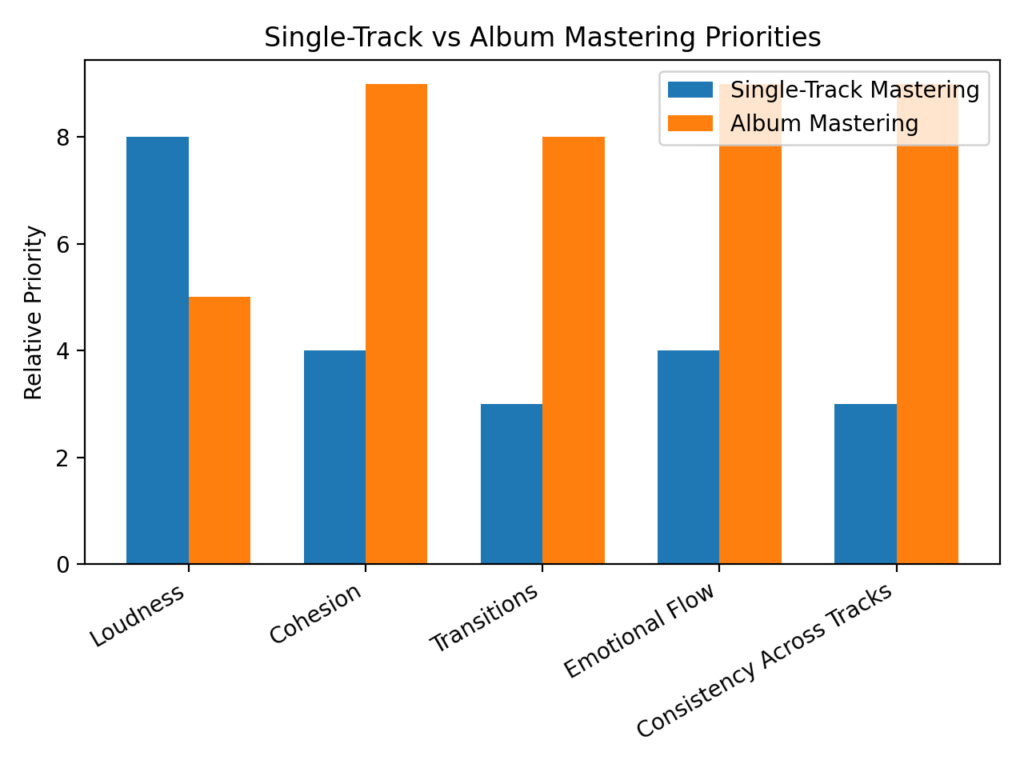
When you’re mastering a single, the goal is pretty straightforward: make that song sound as good as it possibly can on its own. When you’re mastering an album, the priority shifts.
Single-track mastering asks:
“How do I make this song sound great?”
Album mastering asks:
“How do I make all of these songs work together?”
That means sometimes a song that could be louder, brighter, or heavier on its own gets dialed back a bit so it fits the bigger picture. The album always wins over the individual track.
Before You Even Start: Album Prep
The best album masters actually start long before you open a limiter.
I’m looking at mix consistency first. I’m not expecting every mix to sound identical, but they should at least live in the same universe. If one song is dark and mid-forward while the next is ultra-bright and scooped, mastering turns into corrective surgery instead of cohesive finishing.
I also spend time with reference tracks, and not just for loudness. I want to hear tone, depth, and emotional weight. I prefer referencing full albums rather than singles so I can understand how energy shifts across a record.
And I need to know the intended formats early. Streaming, vinyl, CD — or all three? Each format has different constraints, and those decisions affect how aggressive or restrained the master should be.
My Album Mastering Process
I’ve mastered albums across pop, hip-hop, singer-songwriter, and indie projects for artists releasing on streaming platforms, vinyl, and everything in between. This is the workflow I keep coming back to.
This is also the part most people want to skip — and honestly, that’s where things fall apart.
One Session, All Tracks
I always master albums in a single session. Every song gets loaded in order, routed identically, and monitored through the same chain. This alone solves half of the “my album doesn’t sound consistent” problem.
Choose a Benchmark Track
There’s almost always one song that defines the album sonically. Maybe it’s the single, maybe it’s the emotional centerpiece. I dial that song in first, then use it as the reference for everything else.
Broad EQ Before Loudness
Album mastering is about subtlety. I’m making small tonal moves to help tracks sit together — often less than 1 dB at a time. If a song needs major EQ, that’s usually a mix issue, not a mastering one.
Dynamic Control With Restraint
Compression in album mastering isn’t about impact. It’s about control. I’m listening for how transients and low-end energy behave from song to song, not just within a single track.
Loudness Matching Across the Album
This is where LUFS numbers can actually mislead you. Two songs can hit the same LUFS and still feel wildly different in energy. I level-match by ear first, meters second. Albums should breathe. Not every song needs to hit the same loudness.
Sequencing, Spacing, and Fades
This is one of the most overlooked parts of album mastering, and it’s absolutely critical. Half a second too much silence between tracks can kill momentum. Too little feels rushed. Fades should feel intentional — not like you automated them and called it a day.
Creative vs. Technical Mastering
Good album mastering sits somewhere between science and taste.
Technically, you’re managing frequency balance, dynamics, stereo width, and translation across systems. Creatively, you’re shaping how the album feels as a complete statement.
A pop album might need consistent energy from track to track. A singer-songwriter album might benefit from more dynamic contrast. A hip-hop album might prioritize low-end consistency and vocal presence above everything else.
There’s no preset for that. It comes from experience — and from listening to the album as a listener first, not an engineer.
Preparing the Final Album Master for Distribution
Once the sound is right, delivery matters.
A proper album master usually includes:
- High-resolution WAV files
- Streaming-optimized versions when needed
- Vinyl-specific masters when applicable
- Correct spacing, fades, and final track order
- Clean metadata and file naming
This is your last chance to catch mistakes before the music goes public. Once it’s live, it’s live.
Common Album Mastering Mistakes
Over-chasing loudness
Making every song as loud as possible kills dynamics and makes albums exhausting to listen to. Just don’t.
Ignoring track order
Mastering songs out of sequence almost guarantees inconsistency. You need to hear the flow.
Fixing mix problems in mastering
Mastering can enhance a mix, but it can’t rescue it. If a song needs drastic changes, send it back to mixing.
Treating an album like a playlist
Albums tell stories. Playlists just collect songs. The mastering approach should reflect that difference.
Should You Master Your Own Album?
You can — and many artists do. But perspective matters more than you think.
When you’ve lived with songs for months or years, it’s incredibly hard to hear them objectively. That’s why many artists choose to have their albums mastered by someone who wasn’t involved in the production process. A fresh set of ears can catch imbalances, pacing issues, and tonal shifts that are completely invisible when you’re too close to the music. If you do decide to hire a mastering engineer, knowing what to listen for and what questions to ask can make a huge difference.
Final Thoughts
An album master isn’t just the final technical step before release. It’s the moment where everything comes together.
When done right, album mastering doesn’t draw attention to itself. It simply makes the record feel finished, intentional, and ready to exist in the world alongside everything else competing for ears.
That’s always the goal.