

I’ve been mixing and mastering professionally for over 20 years, and I still get this question from almost every new client: “Wait, what’s the difference between mixing and mastering again?”
It’s a fair question. The terminology gets thrown around loosely, sometimes by people who don’t fully understand it themselves. So let me break this down the way I’d explain it to an artist sitting across from me at the console.
The Short Answer
Mixing is where you take all the individual pieces of a song — vocals, drums, guitars, synths, bass — and blend them into a single, cohesive stereo track. It’s creative, detailed, and where most of the heavy lifting happens.
Mastering is what happens after. You take that finished stereo mix and prepare it for the world. Loudness, tonal balance, format delivery, consistency across platforms. Mastering is the final set of ears before your music reaches listeners.
Different inputs, different goals, different skill sets. But both matter.
What Is Mixing?
When a song comes to me for mixing, I’m receiving a session full of individual tracks — sometimes 80, sometimes 150, occasionally more on a complex hip-hop or pop record. My job is to make sense of all of it.
Here’s what happens during a mix:
Level balancing is where it starts. Every element needs its place in the track. The kick drum, the lead vocal, the bass — none of these should be fighting each other. Getting the relative volumes right is foundational to everything else.
Panning places instruments in the stereo field. A snare hit dead center. Guitars spread wide. A background vocal double panned left and right. This creates width and space so the mix doesn’t feel claustrophobic.
EQ shapes the tone of individual elements. If the low end of the guitar is clashing with the bass, I’m carving that out. If the vocal needs air and presence, I’m adding it. Good EQ is about making room, not just adding brightness.
Compression controls dynamics. An uncompressed vocal track can go from barely audible to blaring in two lines. Compression tames that range and gives the performance a consistent energy that translates better in a mix.
Reverb and delay create depth and dimension. A completely dry mix sounds unnatural, almost claustrophobic. The right amount of room, plate, or hall reverb makes instruments feel like they exist in a real space.
Automation is the final layer — adjusting levels, effects, and parameters over time to keep the listener engaged and make the song feel alive. A static mix is a boring mix.
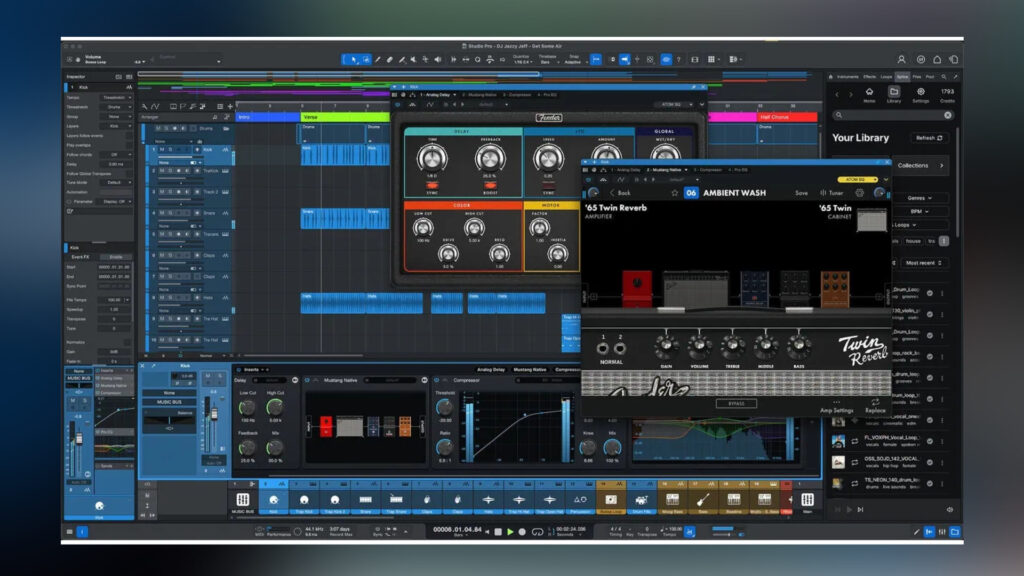
I work primarily in Studio Pro, but the DAW is honestly secondary to your ears and your decision-making. Mixing is equal parts technical and creative. A great mix should hit emotionally, not just technically balance correctly.
What Is Mastering?
Once the mix is done and approved, mastering is next.
I receive one thing from the mixing stage: a stereo file. That’s it. No individual tracks to adjust, no ability to push the vocals up or pull the snare down. What I have is the whole thing baked together, and my job is to optimize it. (you can do stem mastering which does give you some more option but that’s for another article.)
Mastering involves:
Broadband and surgical EQ — but with much more subtlety than mixing. I might be shaping a few dB across the whole spectrum, not carving 10dB notches out of individual instruments.
Compression to add glue and cohesion to the final mix. A well-mixed track often just needs a gentle nudge to feel finished and solid.
Limiting to maximize loudness without distorting. Streaming platforms like Spotify and Apple Music have specific loudness targets (around -14 LUFS integrated for most platforms), but that’s not the target. Making a song as loud and as competitive as possible is what takes years of understanding. I’m Apple Digital Masters certified, which means I’m trained specifically for the quality standards Apple requires.
Stereo enhancement where needed — things like mid/side processing to tighten the low end or widen the high frequency content appropriately.
Format preparation — the final master files for streaming, CD, and vinyl are often different. A mastering engineer handles that delivery.
Here’s the key thing most people miss about mastering: it can’t fix a bad mix. I’ll say that again because it’s important. Mastering can polish a good mix. It cannot rescue a broken one. If your low end is muddy, your vocals are buried, or your transients are smearing — those are mixing problems. No amount of limiting and EQ at the mastering stage will undo that.
Mixing vs. Mastering: The Real Difference
| Mixing | Mastering | |
|---|---|---|
| What you’re working with | Individual tracks (stems) | Final stereo file |
| Goal | Creative blend, balance, and dimension | Polish, loudness, and distribution readiness |
| Tools | EQ, compression, reverb, delay, panning, automation | EQ, compression, limiting, stereo enhancement, metering |
| Typical session | 50-150+ tracks | One stereo file |
| Who does it | Mixing engineer | Mastering engineer |
The creative work lives in the mix. The mastering stage respects what was built and finalizes it for release. Think of it this way: mixing is building the house, mastering is cleaning it up before you put it on the market.
Should the Same Person Mix and Master?
Traditionally, mixing and mastering are handled by two separate engineers — and there’s a real reason for that. Fresh ears matter. After you’ve spent hours or days inside a mix, your brain starts filling in the gaps. You stop hearing what’s actually wrong. A mastering engineer who hasn’t touched the session comes in without any of that baggage.
That said, plenty of engineers — myself included — master their own mixes. And honestly? Clients send their mix out to a dedicated mastering engineer all the time, come back, and tell me they preferred what I did. That’s not me being arrogant about it, that’s just the reality of knowing a mix inside and out. When you built it, you know exactly what it’s supposed to sound like and what it needs to get there.
So the answer isn’t black and white. Separate engineers is the textbook approach, and for major label releases it’s almost always the standard. But a great mixing engineer who also masters isn’t a compromise — it can actually be an advantage.
How It Fits Into the Bigger Picture
Here’s the full production workflow so you can see where mixing and mastering sit:
- Songwriting and production — the idea, the arrangement, the performances
- Recording — capturing clean, dynamic takes
- Editing — tightening timing, fixing pitch, cleaning up noise
- Mixing — blending everything into a cohesive stereo track
- Mastering — final polish and preparation for distribution
- Delivery — streaming platforms, physical formats, sync licensing
Every stage affects the one that follows. A poorly recorded track makes mixing harder. A poorly mixed track makes mastering harder. The better the foundation, the better the result at every downstream stage.
What Does a Professional Mixing and Mastering Engineer Actually Do?
When you hire a professional, you’re not just paying for access to good plugins. Anyone can buy plugins. You’re paying for something that takes years to develop — and it breaks down into a few things that actually matter.
Fresh ears and an honest perspective. You’ve been living inside your song for weeks, maybe months. You’ve heard it so many times that you genuinely can’t hear it anymore. A professional engineer comes in and hears it the way your listeners will — for the first time, with no emotional attachment to any of the decisions that went into making it. That objectivity is worth more than most people realize until they experience it firsthand.
The ability to make people feel something. The technical stuff — EQ, compression, gain staging, translation — that’s table stakes. Any competent engineer can solve technical problems. What separates a great mixing and mastering engineer from a good one is understanding how the technical decisions connect to the emotional experience of the listener. A certain low-end decision doesn’t just fix a frequency problem, it makes the drop hit harder. A vocal treatment doesn’t just sit better in the mix, it makes the performance feel more intimate. That’s the craft.
Experience with every kind of problem. After 20+ years of working on records — everything from A$AP Rocky to Kelly Clarkson to Travis Barker — I’ve genuinely seen it all. Blown out transients, phase issues, sessions recorded in terrible rooms, arrangements that are fighting themselves. When you work with someone who has that kind of mileage, you’re not just getting ears on your song, you’re getting a problem-solver who has already figured out how to handle whatever your mix is throwing at them. That experience shows up in the final product whether you notice it or not.
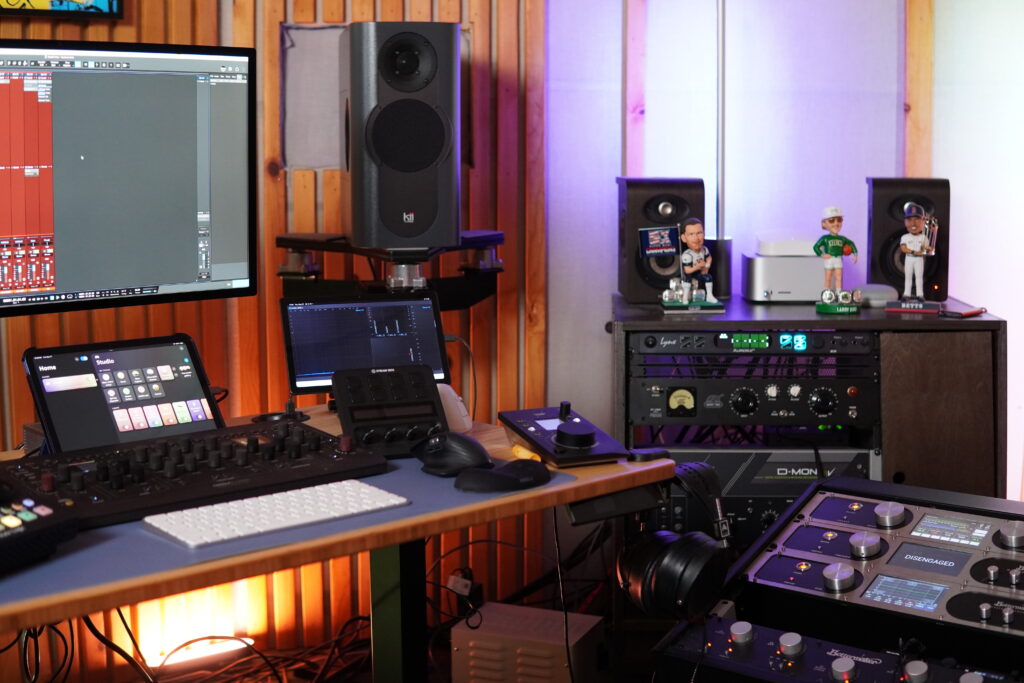
A calibrated environment where the decisions are real. I work out of a studio in the Los Angeles area with a Trinnov ST2 Pro and 3D measurement microphone calibrating my room to reference accuracy, and Kii Three speakers with a flat response down to 20Hz. When I’m making an EQ decision, I’m hearing what’s actually in the file — not a room coloring the picture.
Frequently Asked Questions
Do I need both mixing and mastering? Yes. Mixing makes your song sound intentional. Mastering makes it sound professional on every playback system. Skipping either is leaving quality on the table.
Can mastering fix a bad mix? No. Mastering builds on a good mix — it doesn’t repair a broken one. If your mix has problems, address them before you master.
What’s the difference between a mix engineer and a mastering engineer? A mix engineer works inside the session with every individual track. A mastering engineer works with the final stereo file and focuses on the overall presentation of the finished song.
How loud should my master be? For Spotify and Apple Music, you’re targeting around -14 LUFS integrated. For more aggressive genres, some engineers push closer to -9 or -10 LUFS, but loudness isn’t the goal — translation is.
Should I mix and master at the same time? Never mix and master in the same session. Treat them as separate processes. Your ears need a reset between the two.
Final Thought
Mixing and mastering are both essential, and neither one is a shortcut for the other. As someone who does both professionally every day, I can tell you the artists who understand these stages — who show up with clean sessions, realistic expectations, and an appreciation for the process — consistently end up with better records.
If you’re ready to take your music seriously, check out my online mixing and mastering services or explore pricing here.
This is very helpful. Thanks.