

Every week I get sessions from artists who’ve slapped reverb plugins on every channel, sometimes stacked with sends on top of that. The result? A cloudy, washy mess that kills the energy of an otherwise great song. I’ve mixed records for artists like Travis Barker and Sammy Adams, and whether it’s rock, hip-hop, or anything in between, I’ve landed on the same five-effect chain that works almost every single time.
In this post I’m going to break down exactly what that chain is, how I set it up in my sessions, and the one bonus plugin I use to take choruses to another level.
Why Most Independent Artists Struggle with Reverb and Delay
The problem isn’t that you’re using reverb — it’s that you’re using too many different reverbs in too many different places with no system behind it. When you put reverb directly on a channel, stack another instance on a bus, and throw a delay on top, each one starts fighting the others for space. The vocal gets buried, the mix loses clarity, and no amount of EQ will dig you out of that hole.
The fix is simple: build a send system, set it once, and blend to taste for every mix.
My 6-Send Session Template for Reverb and Delay
I keep six sends ready in every session before a single track gets loaded. Here’s what they are and why each one earns its place.
1. Room – Seventh Heaven (Bricasti Emulation)
The room is your foundation. I use the 7th Heaven plugin, which emulates the Bricasti hardware reverb — one of the most sought-after units out there. The Studio A room setting with a 0.70 decay time is where I start. It adds just enough life to the sound without drawing attention to itself. You want to feel the room, not hear it.
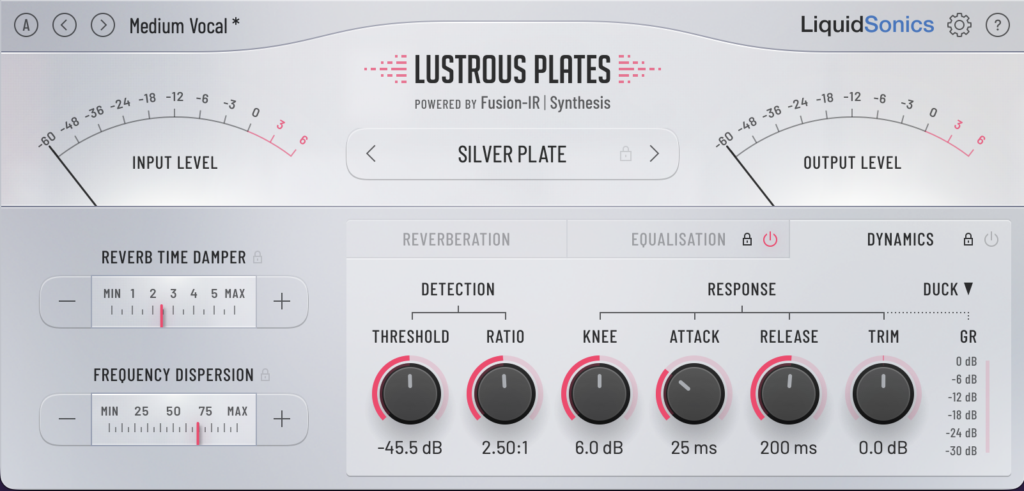
2. Plate – Lustrous Plates (Liquid Sonics)
This one comes in the Slate bundle but it’s actually made by Liquid Sonics, and it’s become one of my go-to vocal reverbs. What I love about it is the pre-delay section — you can lock it to the tempo of the song, which makes a huge difference in how well the reverb sits in the groove. I usually start at a 16th note triplet pre-delay, but I’ll move it up to a straight 16th depending on the feel of the song. It also has a dynamic section and a clean EQ built in. I always start with the medium vocal preset and go from there.
3. Micro – Eventide MicroShift (H3000 Setting)
The Eventide plugins are slept on. I use the Microshift from the H9 series on the H3000 MicroPitch setting. It’s essentially the same idea as a Dimension D chorus or Soundtoys’ Little Microshift — a subtle pitch-spread effect that makes a vocal feel wider and more three-dimensional without adding any visible reverb tail. I keep the settings pretty consistent across mixes, but having those pitch sense controls available is useful when a vocal needs something slightly different.
4. Eighth Note Delay – Waves Repeater (CLA-ish Preset)
I’ve been using this CLA-inspired eighth note preset from the Waves Repeater for about eight years and it has never left my template. It’s technically not a perfect eighth note, but it’s close, and the way it widens things out is just right. One of my favorite tricks: I’ll send the eighth note delay into the plate reverb. That washes the delay out so it doesn’t slap you in the face, but you still get all the width and dimension it brings. It’s a small thing that makes a big difference.
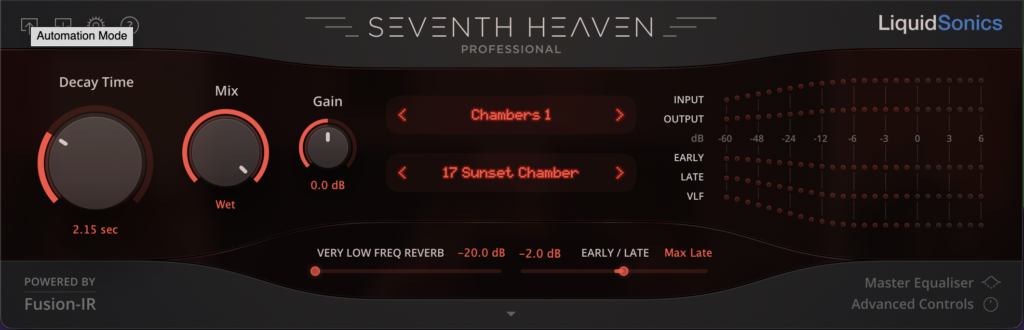
5. Chamber – Seventh Heaven (Bricasti Emulation)
The Sunset Chamber is another Bricasti emulation from Liquid Sonics, and the approach here is simple: set it and mostly forget it. I’ll dial in a pre-delay timed to the BPM like I do with the plate, but the chamber tends to be my most “leave it alone” reverb. It adds depth and a sense of space that the room and plate don’t quite give you on their own. Together, these three reverbs — room, plate, and chamber — each contribute something different, and blending small amounts of all three is what creates that signature depth you hear in professional mixes.
How I Actually Use These Sends in a Mix
Here’s the key: everything starts at zero. All six sends are at zero when I open a new session. Then I play the song and slowly bring each one up until I can really hear what it’s doing to the vocal. Then I dial it back until it’s barely there. That’s the sweet spot.
You don’t want the listener to think “wow, that has a lot of reverb.” You want them to think the vocal sounds alive. Those are two very different things.
The magic of blending multiple types of reverb — a room, a plate, a chamber — instead of using one big hall at full blast is that the vocal gets this layered, natural-feeling space around it. Each reverb contributes a different texture. None of them is doing all the heavy lifting, so none of them sounds artificial.
The Bonus Plugin: CLA Epic for Choruses and Lift
This is where things get interesting. On top of those five sends, I keep a sixth return for the Waves CLA Epic, and I save it specifically for moments where a song needs to open up — usually the chorus.
The CLA Epic gives you four delays and four reverbs inside one plugin, and the routing is what makes it special. You can send each delay into any of the reverbs, which means you get this layered wash of delays blurring into space. On most mixes I’ll use a slap delay, a throw delay, and a tape delay — all routed into a room reverb inside the plugin — so the delays have space and decay naturally instead of just bouncing around in a dry room.
The key move is automation. I’ll keep the Epic off during verses and automate it in on the chorus. Combined with the chamber coming in at the same time, the vocal just lifts. It’s a tried-and-true contrast trick: give the verse a contained, intimate sound, and then let the chorus breathe open. The listener feels it even if they can’t explain why.
Quick Recap: The Full Chain
- Room – 7th Heaven, Studio A setting, 0.70 decay
- Plate – Lustrous Plates, medium vocal preset, tempo-synced pre-delay
- Micro – Eventide MicroShift, H3000 MicroPitch setting
- Eighth Note Delay – Waves Repeater, CLA-ish preset (sent to the plate)
- Chamber – Sunset Chamber, tempo-synced pre-delay
- Bonus – CLA Epic, automated in on choruses
You don’t need these exact plugins to build a system like this. A hall, a spring, or a different pitch-spread plugin can all work. The point isn’t the tools — it’s having a consistent, intentional system where you know what each send is going to give you before you turn it up. That’s what lets you focus on listening to the music instead of chasing a sound from scratch on every session.
Want Your Vocals to Sound Like This?
If your reverb and delay situation is a mess, or your mixes just aren’t translating the way you want them to, this is exactly the kind of thing I fix when I’m mixing a record. Check out my mixing and mastering services at MixandMasterMySong.com and let’s get your songs sounding the way they should.